PROFESSIONAL CHIMNEY SWEEP & REPAIR SERVICES
We help protect from unnecessary fires and carbon monoxide poisonings in your home
We help protect from unnecessary fires and carbon monoxide poisonings in your home
Obstruction Removal
Remove an Obstruction blocking your Chimney
- There are several kinds of obstructions that a Chimney Sweep could run into when inspecting your chimney.
- • Small Animals such as squirrels or raccoons and their nests
- • Birds and their nests
- • Beehives
- • Leaves
- • Other outdoor debris
- Most obstructions that
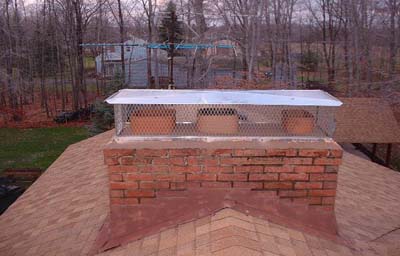
enter the chimney from your roof can be prevented by installing a chimney cap on the top of your chimney. If you live in an area with a high population of squirrels, raccoons, birds,
leaves or bees, we highly recommend installing a chimney cap preemptively to save you the headache down the road of an unwanted intruder.
- If you have animals in your chimney DO NOT START A FIRE and try to smoke them out. First of all, this is inhumane and no animal deserves to suffer this way. Second of all, the nest is a fire hazard and it could create a bigger mess for you in the long run. If a squirrel is stuck in your chimney it could be hurt or unable to climb out on its own so what good is a fire going to do? A raccoon or bird usually enters a chimney because it looks like a nice hollow tree to have babies in. Regardless, the animals do not want to leave your chimney on their own and need to be trapped and relocated. You should contact a professional chimney sweep rather than attempt to do this work on your own. There are different state laws regarding the trapping and removal of animals so it is best to leave the work to the professionals who are educated on your state laws prior to doing anything.
- Raccoons
- Squirrels
-
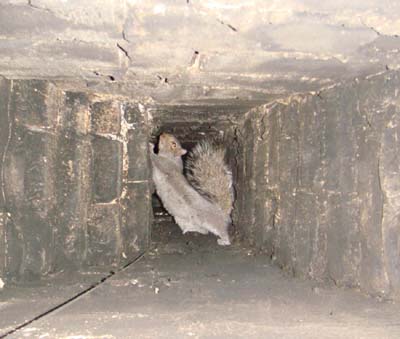 For a squirrel, a sweep can attempt hanging a rope from the rooftop into the chimney. Squirrels are excellent climbers and even if it is slightly injured, it will most likely be able to climb the rope and escape. They will tie the rope around the exterior of your chimney top and let it dangle down as far as the squirrel is. If it does not climb out right away, they can leave the rope overnight and it will likely climb out after they disappear for a little while. They can come back the next day to finish their work. If this technique does not work, a professional animal control specialist can place a squirrel trap within the chimney in hopes of catching it live and relocating it. Once the squirrel is removed, the sweep can clean the nest along with any other debris during their sweep.
- Birds and their Nests
- If you hear a bird flapping in your chimney, it is also safe to assume that the bird is stuck. The easiest way to get the bird out is to shut the doors to your fireplace, but open the damper in order to allow the bird to drop down into your fireplace. If you do not have doors on your fireplace, you can create temporary doors by placing a large box inside your fireplace opening. Silence external noises in the room and wait for the bird to enter the box. Once it is in there, you can slide a cardboard sheet over the opening so the bird is trapped inside the box and can be taken outside and freed. You can also wait until you see the bird enter the fireplace and gently toss a cloth over the bird. Once the bird is covered by the piece of cloth, he will calm down and you will be able to carefully transport the bird in the cloth outside and release it.
If the bird does escape your trap and fly into the interior rooms of you house, it can be gently guided out provided that the ceilings of the building are not too high. This is best done in the evening so you can use light as a guide for the bird. Turn off all interior lights and open as many doors and windows (preferably big doors) as possible. Turn on as many exterior lights as possible so the bird can find the exit. Give it some space to move and to keep it from panicking and exhausting itself.
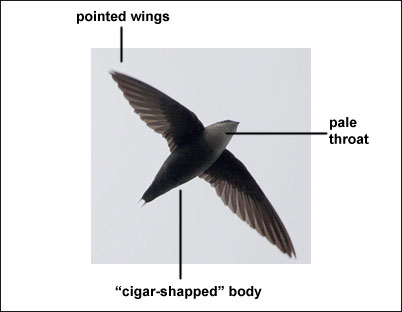 There is one
specific species called a Chimney
Swift that loves to occupy the
chimney and nest. They nest in the fall and will often
return to the same location year
after year. If
you suspect there is a nest in your
chimney, do not start a fire.
It will kill any young
flightless birds and the debris from
the nest is also a fire hazard.
Swifts are protected under
the Migratory
Bird Treaty Act, and
anyone who knowingly destroys birds
or nests that might contain eggs or
young can be fined or penalized.
If you suspect you
have swifts, call your local chimney
sweep professional to come remove
the nest. After
the birds are removed, the chimneys
should always be capped so that
birds can no longer enter via the
rooftop and become trapped.
There is one
specific species called a Chimney
Swift that loves to occupy the
chimney and nest. They nest in the fall and will often
return to the same location year
after year. If
you suspect there is a nest in your
chimney, do not start a fire.
It will kill any young
flightless birds and the debris from
the nest is also a fire hazard.
Swifts are protected under
the Migratory
Bird Treaty Act, and
anyone who knowingly destroys birds
or nests that might contain eggs or
young can be fined or penalized.
If you suspect you
have swifts, call your local chimney
sweep professional to come remove
the nest. After
the birds are removed, the chimneys
should always be capped so that
birds can no longer enter via the
rooftop and become trapped.
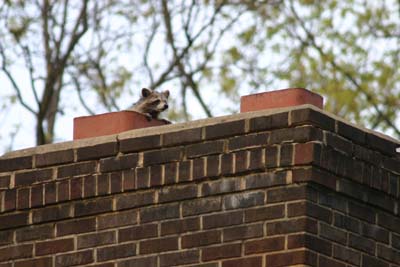 Removing a family of raccoons will require a trap placed on the roof. The roof needs to have a flat surface. A sweep can bait the trap with white bread. Before a chimney sweep sets a raccoon trap, they will understand what to do based on the state laws where you are located. It is illegal to trap and relocate raccoons in some states so it is best to be informed first. For example, in California it is OK to trap but you cannot relocate without written permission by the Department of Fish and Wildlife. Once the raccoon who is likely a mom with babies has been removed, a chimney sweep can perform their cleaning so you can start a fire.
- Beehives
-
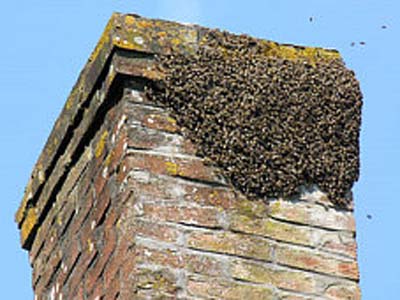 If you see bees buzzing around your chimney top and they have not built a nest yet, it's best to be pro-active. It is likely they are beginning to build a nest so at this point; you can light a fire in your fireplace to deter them from settling. They will move elsewhere quickly. If a nest is already established,
DO NOT START A FIRE. This will melt the wax and honey which will drip down and create a bigger mess inside your chimney than you started with. Bees leave pheromones in the air and the melted nest will be difficult to clean properly which could just attract them to come back and rebuild. Also, the likelihood of the wax and honey getting stuck in the smoke shelf and/or damper is very high. It is extremely difficult to clean this melted mess and the sticky wax could potentially seal your damper shut if there is enough of it.
If you see bees buzzing around your chimney top and they have not built a nest yet, it's best to be pro-active. It is likely they are beginning to build a nest so at this point; you can light a fire in your fireplace to deter them from settling. They will move elsewhere quickly. If a nest is already established,
DO NOT START A FIRE. This will melt the wax and honey which will drip down and create a bigger mess inside your chimney than you started with. Bees leave pheromones in the air and the melted nest will be difficult to clean properly which could just attract them to come back and rebuild. Also, the likelihood of the wax and honey getting stuck in the smoke shelf and/or damper is very high. It is extremely difficult to clean this melted mess and the sticky wax could potentially seal your damper shut if there is enough of it.
- To properly deal with a beehive in your chimney, you must physically remove it. It is not sufficient to just kill the bees because of the mess the hive leaves behind the next time you want to make a fire. First, you need to exterminate the bees with a pesticide so the hive is vacant. Then, you should remove the hive from the rooftop, going up. Going down from the top is a bad idea because you do not want to navigate around the smoke shelf and damper and make a bigger mess than you already have. If anything gets stuck up there, it is much more difficult to clean. It is also possible that the hive is hidden from the bottom because it is resting between the flue and the external chimney. To clean out the hive, scrape out the honey and wax. This may take several attempts as it is a messy job.
- Call a chimney professional or bee company if you do not feel safe doing this job yourself. If a bee company does come to remove your hive, do not allow them to mortar a fine mesh screen over the top of your chimney, which is common practice to prevent bees from coming back. The screen causes major smoke damage which can come into your home and destroy your furniture, walls, and carpeting. The mesh will also prevent you from annual rooftop cleanings. In a prefabricated (factory-built) chimney system, installing screening material over the top of the chimney may cause the prefab system to overheat and start a fire. It is likely your homeowner’s insurance will not pay for the damages if this happens because you made a modification to your chimney.
- If the bees do return and you have a masonry chimney, you could install a top sealing damper which closes off the top of the chimney flue & helps prevent bees from reentering the chimney.
- Leaves
- If your chimney is surrounded by a lot of trees, leaves and twigs can become a problem by accumulating within your chimney. When inspecting, our chimney sweeps have found some chimneys literally packed with leaves. Leaves are a huge fire hazard in and of themselves, but even if there are just a few leaves and twigs, this can restrict airflow when you are lighting a fire, which is another safety hazard. If you live in a wooded area, it is smartest to have a chimney cap that prevents leaves from entering your chimney. It is also smart to have your chimney sweep inspect for debris after each fall season before you light your first winter fire to make sure you are safe.
- Other Debris
- Finally, other debris along the same lines as leaves can enter your chimney from the top, especially if you do not have a chimney cap. Imagine a random piece of trash that is blowing by such as a plastic bag if it’s a very windy day. All sorts of debris from outside has been known to come out of chimneys and professional chimney sweeps can tell you their own tales. Some of the weirder items we have come across include children’s toys such as footballs, money (woohoo!), letters to Santa Claus (how cute), shoes and other clothing articles, and people! That’s right, there are plenty of crazy stories about people entering chimneys and getting stuck. Burglars or stalkers who give Santa a run for his money but can’t get out and eventually have to call for help! It sounds silly but it’s been known to happen. Your best prevention from debris getting into your chimney is to cap it and have your sweep share the crazy stories about someone else’s house, not yours.